Menu


You too can help children exposed to toxic stress! The Center for Child Stress & Health is dedicated to providing free, quality resources for patients, families, professionals and medical providers that will provide primary, secondary and tertiary health prevention for children.
Public Awareness campaigns are available for free download to be used in your communities on the topics of Resilience, COVID-19, Parent as Protectors and Self Care for Mothers. We will be adding more regularly so check back often!
Free Media CampaignsCARACOL is a two-generation primary care toxic stress screening, prevention and treatment program. It addresses the infant and early childhood mental health needs of underserved children, including immigrant children and children from migrant farm-working families who are at high risk of exposure to toxic stress. It is housed in a pediatric and women’s primary care clinic at a Federally Qualified Health Center (FQHC).

Overview of the Caracol Program including the process and provided services
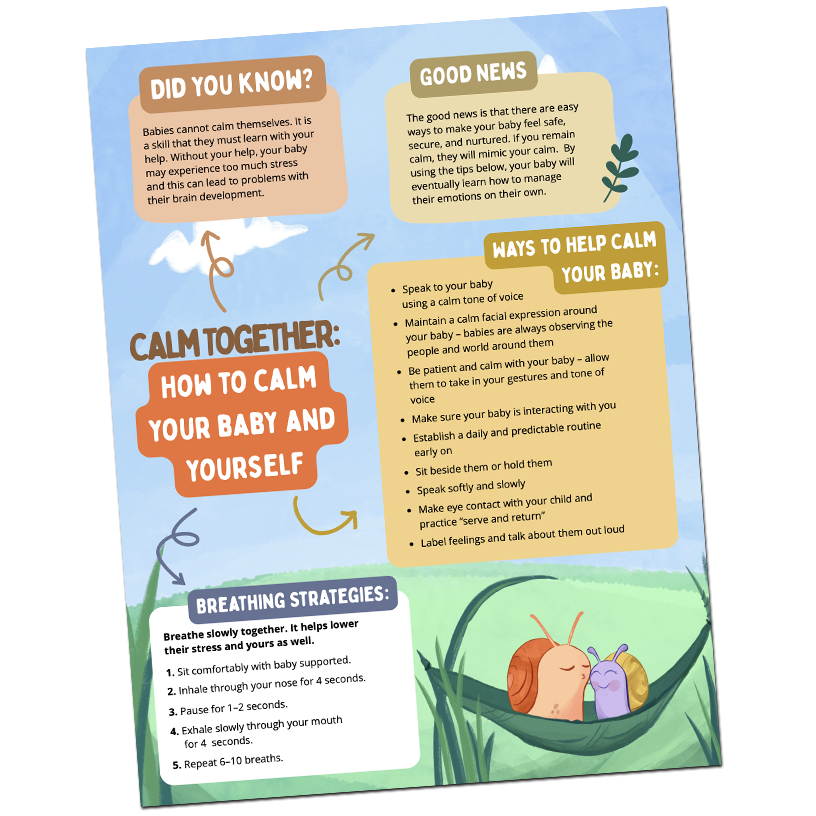
Tips, strategies, and excercise for calming both yourself and your baby.
Please find a full up-to-date list of our research and publications at the Florida State University Libraries digital repository.
This study explores the prevalence and impact of Adverse Childhood Experiences (ACEs) among rural Latino children of immigrant parents. Findings reveal that ACEs are significantly linked to emotional and behavioral difficulties. The research highlights the need for targeted support for underserved youth facing early adversity.
PDFAPA Citation:
Rosado, J. I., Ramirez, A., Montgomery, J., Reyes, E., & Wang, Y. (2021). Adverse childhood experiences and its association with emotional and behavioral problems in U.S. children of Latino immigrants. Child Abuse & Neglect, 112, Article 104887.
This study investigates the prevalence of ACEs among Latino adolescents in a rural agricultural community and their impact on depression and psychosocial functioning. With 64% reporting at least one ACE, findings show significant links between ACE exposure and mental health challenges, especially among females. The research also suggests that environmental stressors may compound the effects of ACEs, influencing neuropsychiatric development.
PDFAPA Citation:
Rosado, J. I., Mesidor, J. K., Chege, S., Wang, Y., Torres, L., & Stanwood, G. D. (2024). Assessment of adverse childhood experiences in adolescents from a rural agricultural community: Associations with depressive symptoms and psychosocial problems. Neurotoxicology and Teratology, 106, Article 107396. https://doi.org/10.1016/j.ntt.2024.107396
This study examines how integrated behavioral health interventions in pediatric primary care can support children who screen positive for ACEs. Interventions such as psychoeducation, therapy, and case management led to notable improvements in mood and psychosocial functioning. The findings underscore the value of ACE screening and early intervention strategies for practitioners in primary care settings.
PDFAPA Citation:
Rosado, J. I., Gabany, S., Fortino, M., & Fernandez-Garcia, A. (2025). Examining Interventions for Pediatric Adverse Childhood Experiences in an Integrated Primary Care Setting. Journal of Pediatric Health Care, 39(2), 155–163. https://doi.org/10.1016/j.pedhc.2024.10.015
This study applied the EPIS implementation science framework to introduce a comprehensive ACE screening protocol in a rural clinic. Screening over 2,300 patients revealed valuable clinical insights and improved care, though time constraints and community stressor saturation posed challenges. The findings highlight the importance of structured implementation strategies and resource support in enhancing ACE-related care in primary settings.
PDFAPA Citation:
Rosado, J. I., Reyes, E., Montgomery, J., Wang, Y., Malloy, C., & Simpson-O'Reggio, A. M. (2024). From Planning to Implementation: Developing an ACE Screening Protocol in a Rural Integrated Primary Care Clinic Serving Latino Children. Clinical Practice in Pediatric Psychology, 12(1).
This study examines the pandemic’s impact on educators serving children from seasonal and migrant farmworker families, highlighting significant personal and work-related stressors. Surveying over 1,000 educators, the research reveals ongoing emotional and professional challenges. Findings emphasize the need for targeted support systems, including mental health services and peer collaboration, to aid long-term recovery in schools.
PDFAPA Citation:
Rosado, J. I., Torres‐Aponte, L., & Wang, Y. (2024). Planning for Long‐Term Recovery: The Impact of COVID‐19 on Educators Working With Children From Seasonal and Migrant Farmworker Families. The Journal of School Health, 94(11), 1049–1057. https://doi.org/10.1111/josh.13514
